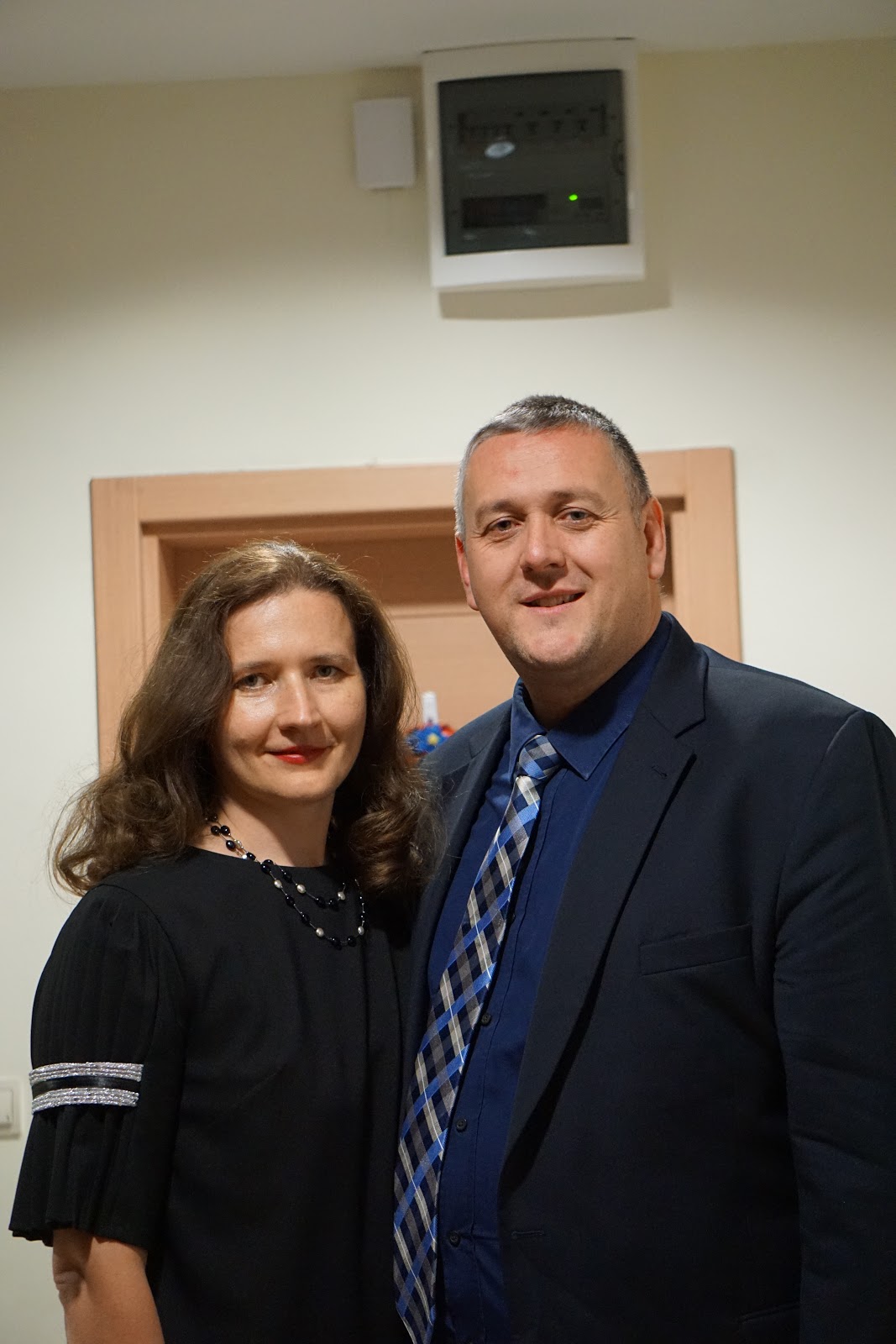
So, in the 5 years we have lived here Spencer had been nominated "Professor of the Year" three times along with four other professors from the entire university. They do a fancy "Best of the Year" award ceremony here with the red carpet, ladies and gents dressed in fancy gowns, opening envelops with the names of the winners, and all that stuff (imagine Oscar ceremony on a student level). It's ... interesting. Spencer has yet to win the nomination but the fact that he has a great impact on the students' lives and is a mentor to many of them is quite obvious. This year the NU APSS team (media club) interviewed him, so I thought I would put that interview here in its entirety because I want our girls to read it before they go to college. So without delaying any longer, here it is...
[The interview was done by the students and we kept the transcript as it was written by them.]
[The interview was done by the students and we kept the transcript as it was written by them.]
Know Your Prof:
Dr. Spencer L Willardson


Meet Professor Spencer Willardson, assistant professor at the School of Humanities and Social Sciences. Prior to joining NU faculty, he spent nine years in the U.S. military and has been deployed in the Iraq War. Dr. Willardson earned a B.S. degree in Business Administration from Utah State University and an M.S. degree in Strategic Intelligence from the American Military University. He received his PhD from the University of Iowa.
His areas of interest include the sale of arms as a foreign policy tool and the issues of security and intelligence in general.
In this interview, Dr. Willardson talks about his experience in Kazakhstan, shares lessons learned from his rich life experience, and opens about his personality outside of the university. He also talks about the book he would like to recommend to all poli-sci students, what he would say if he met President Trump, and the most important skill to acquire at university.
APSS: First of all, we always start with academia. So, how did you get into it? What was the impact of your childhood or school years for your decision to go into academia?
SW: Well, childhood is interesting. I came from the house with a lot of books. My grandfather was an engineer - he was a professor. So, I kind of knew a little bit about academia, although really not a lot from him. But the biggest reason I got into academia was that I was in the army. I was thinking about what I want to do with my career afterward and thought about going to work as an analyst for the government. I liked it a lot and fell in love with teaching especially. So, I decided to stay in academia as a career rather than moving back to the government side. A little bit of different path, most of my colleagues here decided to go to academia early and went towards that side. I’ve had a break in my life between undergrad and graduate school.
APSS: Could you tell us more about your student life and universities you’ve attended?
SW: Yes, also interesting. My undergraduate was at Utah State University because I’ve got a full scholarship and my grandparents lived in that city. So, I could live with my grandparents and go to school because my family wasn’t in a position to pay for school. I had to do it on my own. But my path from the start of school to graduate was long. I’ve started, took a break for two years, left to Ukraine, came back, joined the army and missed the year in army training, got married, went back to school, got sent to war in Iraq, came back. So, by the time I graduated from school, it took me eight years. I didn’t have a traditional student life because most of the time that I was going to school I was married and working full time and going to school full time. So, not kind of a traditional undergraduate and academic experience, but it worked for me. My undergraduate major: I started off with engineering because I didn’t know what to do with my life and I thought I would do something that challenged me. On my own, I really loved to read history, read about the world. I could do the math, but I was not very excited about it, so I figured out to do engineering.
Once I got married, my wife said “Is engineering really what you want to do?” and I decided that it was not.
So, I finished a degree in business and administration. Then, when I was in the army, I did a masters degree in strategic intelligence and when I finished the army, I went to graduate school and studied political science. Again, kind of a curvy path.

APSS: That is a huge turn from business administration to PhD in political science. Was it hard to do a PhD without a previous background in Poli Sci?
SW: Yes and no. So, even though my Master's degree wasn’t political science, it was closer to political science. I had some sort of preparation. Like I said, I was more comfortable with history, I’ve read a lot of things that probably were considered as political science in terms of books that I was interested in. Everybody else in my graduate cohort either had a bachelor or bachelor and masters degrees in political science, so, for my first two years, I had to catch up, read and learn concepts that they already knew. But, on the other hand, having a different kind of experience made me look at things from different perspectives, and ask different kind of questions. Although it was challenging, in the end, it was ok.
APSS: What was your first research project you published?
SW: The first one was a paper based on my experiences in Iraq, and it was a mixture of political science and intelligence studies. It looked at ways that you could use prisoners to gather intelligence. Overall, all my research is concerned with arms sales, I’m interested in why states sell each other, give each other, lend each other the capabilities to destroy each other. This is puzzling to me. I’m working on giving a general theory for this particular phenomenon because even though there are some pieces of research on this issue, they usually take the fact that this happens for granted. It takes most of my research time. That is my current research as well. I have other projects about Kazakhstan, multi vectorism, military sphere, arms sales, human rights.
APSS: What are the differences, in your opinion, between Kazakhstan and the US in terms of military?
SW: The size. Kazakhstan is a small state, while the US is the superpower, that changes a lot of things. I teach Civil-Military Relations right now and one of the things that I talk to students about during the first week was the US military budget, it is 750 billion dollars. Total GDP of Kazakhstan is much less than that. The incredible amount of spendings on military equipment is what makes the two countries different. The role of Kazakhstan in the region, multi vectorism being stuck between two great powers change a lot here. Also, the military isn't the highest priority. Human development, economic development is what the regime uses for legitimation and not the military. It has a secondary place even compared to other Central Asian states like Uzbekistan. The focus on the economy makes military considerations secondary.
APSS: How did you decide to join Nazarbayev University?
SW: Well, my wife is Russian from Krasnoyarsk, not too far from here. Two of us met in Ukraine in the late 1990s. When we got married, we had always talked about trying to come to this part of the world and live for a while, especially we had kids, who were young and let them experience this part of the world and learn Russian. But then Russia changed the bunch of laws, and it became much harder for foreigners to work there, and we kind of forgot about it.
When I finished graduate school, I was looking for jobs and I found the job at NU and applied. The first year I applied, I didn’t get the job, and I ended up taking a job in Las Vegas and working there for a year. This was a really good experience, that taught me a lot about being a professor and let me be close to my family for a while. Then I applied again and got the job. We came, and we have been here for five years. I have really enjoyed it.
APSS: You have been to Ukraine and you have had some experience in post-Soviet countries. So, when you came here were your expectations confirmed?
SW: Yes and no. Astana is a very different place than other post-Soviet countries. I felt very comfortable in Almaty. During my first fall here, we went to Karaganda and Temirtau, and for me (since in Ukraine there were mines and steel plants), these two cities felt familiar. Astana with all its newness is different.
As far as the mentality, people were happy when we came; Kazakhs, in general, are more open, welcoming and outward-friendly than Russians are. So my wife and I felt at home right away. We came in, kind of knowing what to expect, but we were pleasantly surprised about Kazakhstan.
The one thing that drives us crazy, however, is everything being late. That is something we haven’t got used to over the years. But, in general, we have been very happy. It took a while for me to get used to Kazakh names, as opposed to Russian names. Last week, I was in one room and my family was watching TV-show “Лучше всех” - a show with Galkin where he interviews kids. I heard a kid coming along and saying “My mother’s name was Inkar”, and I was like: “Oh, I bet they are Kazakh”. Then, my wife said: “No, they are from Tajikistan”; and then she was like: ”No, they are Kazakhs from Tajikistan”. So, I now recognize Kazakh names, and we fell in love with Kazakhstan and we feel like it is a home for us.
APSS: Do your kids like Kazakhstan?
SW: Yes, they went to a local school for a couple of years. So they went to the international and local school, and most of their friends are children of Kazakh faculty that live here on campus. They run around and speak Russian, and have fun. They do a lot of things at the children’s palace, so they do sports, art, music with their friends from here. They have really done well.
APSS: Could you please tell us one thing that you like about Kazakhstan and one thing that you dislike (except being late)?
SW: Oh, besides being late? (laughs). So, one of the things I really like about Kazakhstan is that people are outward-oriented. They want to have experiences, they are interested in other people and other cultures - that plays out in both their choices to travel and go to other places, but also in how welcoming they are to other people coming here. I really think this is great quality and I appreciate it.
The thing I don’t like: everything being late is a big one, and the second one is the incredible levels of bureaucracy in certain things. That’s post-Soviet and it is in a lot of places, but that is what frustrates me more than anything.
APSS: Would you say that NU suffers from high levels of bureaucracy?
SW: Yes, so the academic side and the administrative side of the University are two different things. The administrative side is very post-Soviet - that is a big source of friction between faculty and the university itself, because of those issues.
APSS: So, the year before you came here - you spent in Nevada, and when you came here, the climate here must have been very different.
SW: But, the climate in Nevada is very different.
APSS: So, you have been used to it.
SW: Well, nothing prepares you for wind and weather in Astana, especially the wind, But I mean I grew up in Utah, which is a very mountainous state and it’s probably closer in climate to Almaty than Astana. I prefer cold to hot.
APSS: For how long are you planning to stay here?
SW: Who knows. Right now our kids are at an age where we are thinking about going back and kind of letting them experience America as well. When we moved here, they were still very young and now our oldest, who was 9 when we moved here, is now 14 and is getting ready to start high school. So, it’s kind of an important age. We are looking currently and if we find the opportunity, we may move back to the US.
APSS: Would you say that NU students differ from those of other universities?
SW: Yes and no. So, I have been to different kind of universities. I taught in UNLV which is a unique place because it’s the second most diverse university in the US. There were a lot of minority students and people from all over the world. Also, different socioeconomic students. My students there were very heterogeneous. In Iowa, where I did my graduate studies and started teaching for the first time, most of the student were upper-middle class students and were very well prepared for college. There is a very good cross-section of students here. You are just as capable and just as driven. I think, top to bottom, very good students. There is a little variation or diversity compared to maybe other universities in the US. Generally, I am very happy with the students here.
APSS: What is your favorite class to teach here?
SW: Civil-Military Relations has been my favorite. I also teach a class on arms which has to do a lot with my research and it’s a unique class. It’s also a smaller one since it’s a grad class. Those 2 are my favorite.
APSS: How do professors generally feel about teaching intro-level courses?
SW: I really like it. My first year here I taught 100-level classes. I taught Introduction to International Relations and PSQM. What I found is that from a class of 55 students that I taught, most of them have gone on to PSIR majors and they graduated last year. Many of them then took the rest of the classes that I taught. So, they kind of grew up with me here in this university. Also, in the fall of last year, I got to teach Introduction to IR again and it was a lot of fun. There’s something interesting about teaching first-year students: they are both impressionable and enthusiastic. They are different challenges to it, but I like teaching intro-level classes.
APSS: Now, let’s talk about you more as a personality. What are your hobbies?
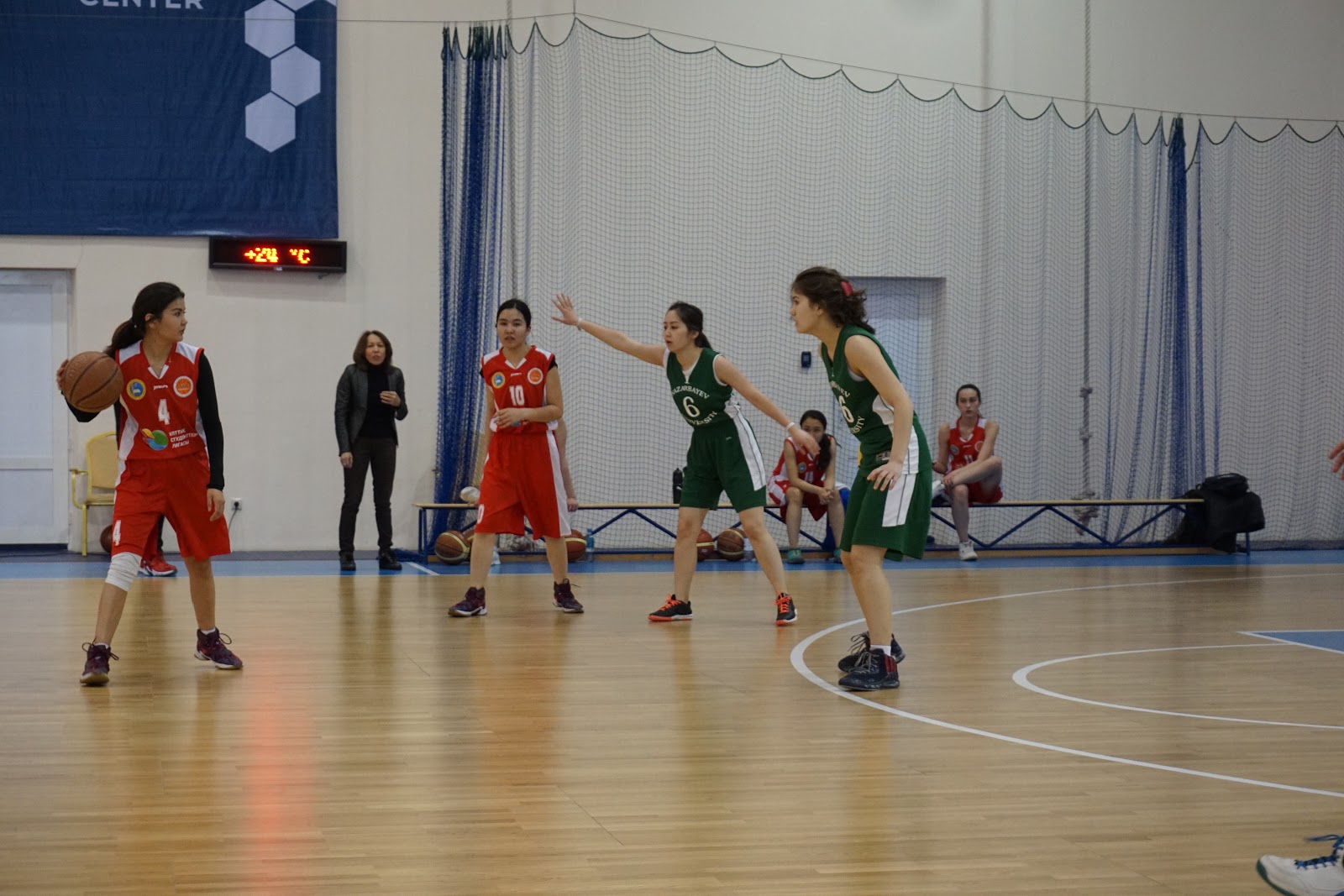
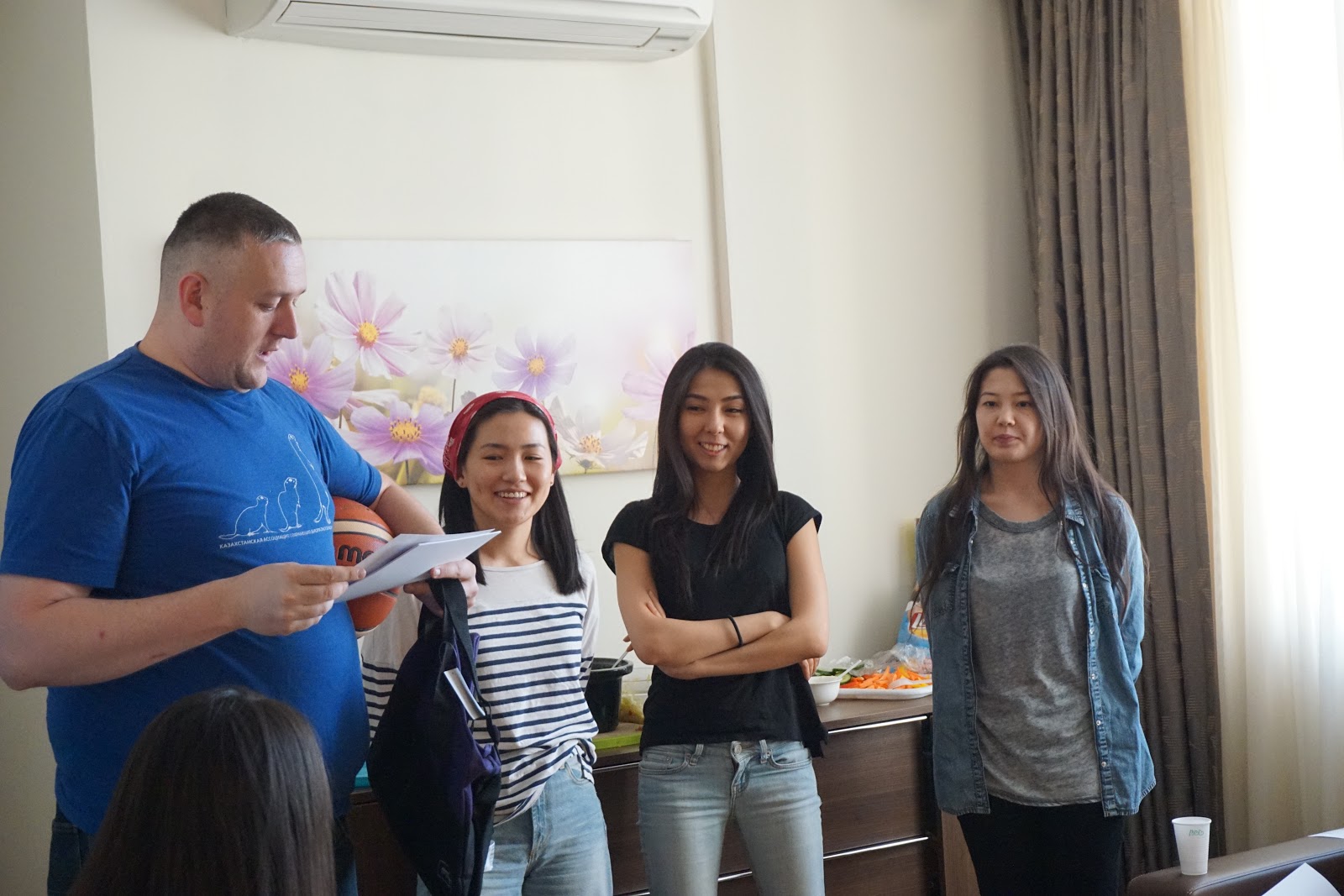
SW: I am really more of a quiet person and I am a homebody. I like to travel and seeing new things. But the only reason why we travel is that my wife pushes that. Once I am there, I like it. But my kind of ideal is to sit at home and read a book. I love playing basketball. While I have been here, I have coached the women’s basketball team for the last 4 years. As an assistant coach my first year. So, that takes up a lot of my free time. On my own, I like to read and spend time with my family. As far as hobbies, it’s reading and writing, which is probably why I became a professor.
APSS: Coming to reading, what’s your favorite book?
SW: It is hard to pick a favorite. Genre-wise, I like reading history. Especially, XX century history, war, and political history. For, what I like to call “dessert” books, I like mysteries and detective novels. Some Stephen King, but mostly murder-mystery type of books.
APSS: Are you more of a fiction or nonfiction guy?
SW: Kind of half and a half. When I travel or when I am on a vacation, I like to read novels. When we are at home, on a vacation, I read like two or three books a day. During a year, I have a couple of fiction books at a time, right now one is about Magnitogorsk, another one is about the enlightenment and the history of science. So, I prefer a diverse base.
APSS: If you had to recommend one book for students to read, what book would it be?
SW: It would probably change year to year. But one book that I would recommend you to read as a political science student, is “1984”.

APSS: What do you think is the best investment you have made to get you where you are now?
SW: Reading. I think that I read a lot, I had things to put for what I read. The other investment, I would say, is finding out who I am as a person. It took me a lot of time to figure out who I was. I think, most students do not know what they are going to do, and that’s a scary thing, this doubt to figure out what they really like, who they are and what their strengths are. So, this a valuable investment that I have made - to find out who I am.
APSS: Did you do anything special to get to know who you are?
SW: Oh, yeah, I failed (laughing). Like I said, I started in engineering, went to business, was in the military for nine years, I worked a lot of jobs, and from that, I got to understand what I like and what kind of jobs I don’t want to do. So, just having experiences and learning from them, being reflective about what you are learning.
APSS: Was there any event or a person who changed the course of your life?
SW: For me, there are a couple of inflection points in my life. But the one that put me in the course to get here, besides marrying my wife, is joining the army and being deployed in Iraq. Joining the army was not the decision that I spent a lot of time agonizing about, I just did it. But that decision put me in the point that changed my life radically, the way I feel and experience life.
APSS: What do you value the most in life?
SW: My family. That’s it.
APSS: Have you ever quit anything?
SW: Yes. As for something that I regret quitting - piano lessons when I was a kid. Other things that I quit, I don’t regret about. For instance, I was in a punk band at school. I was the lead singer. I think that if I hadn’t quit that, my life would take a different turn. But I regret quitting piano because it would be a skill that would take me throughout my life.
APSS: Did coming here change your perspective and make you value your American identity more?
SW: That’s tough. Yes and no. I had kind of very strong identity before, apart from being a soldier and being in other places and I have lived out of the country before. So, I think this particular time did not change as much as I had earlier in my life.
APSS: If you were in front of the president, Donald Trump, what would you say to him?
SW: I don’t know if he would let me get a word edgewise. He would be telling me how great he was. That’s kind of his personality and my personality is different: probably I would not say much unless he asked me. So, it depends on what he asked me. I am not really the one to give unsolicited advice.
APSS: Do you feel detached from American politics because you are here?
SW: In a lot of ways, yes. I think when we go home in the summers and see that people are excited about different things. It does not affect me as much here. I think that this detachment is good and it also has to do with the way I consume media. It is hard to be as engaged when it is not directly affecting your side.
APSS: If you could give one advice to students, what would that be?
SW: Learn, take responsibility and control your own life. That follows my speech about procrastination.
When you procrastinate and let your life to be dictated by the deadlines, and when you go from deadline to deadline in crisis mode, you will always be stressed out and you will not be an agent of your life since you do not control the situation. Learning how to organize and prioritize your life, especially your time, is perhaps the most valuable skill that you can learn, develop and cultivate at this point in your life.
More than any particular knowledge, more than any statistical technique and more than any computer programming you might learn in the four years at Nazarbayev University if you can learn how to manage yourself and your time and what you are doing, that’s a skill that is going to get you through life.
APSS: What are other characteristics of a good student to you? When do you realize that this student is going to succeed when you see that person?
SW: So, there are different paths. When I teach PSIR and QM I talk about typologies. Here is the example that I give to answer your question. You can have two dimensions: brilliance and ability, and work. Because all of the students at Nazarbayev University have some sort of talents and abilities, you can have good students and brilliant students, you can have lazy students and hard-working students. Unicorn students are students who are brilliant and hard-working. We have those students. You know that those students are going to succeed from the very first time they walk in the class because they just get it. They work hard and they are always on time and they just succeed. When you have students with average abilities it is hard to tell. They are divided into hard-working or not hard-working. My favorite students are those students who might have average abilities, but who work hard. How do I know if a student is going to succeed? If they fail, then they come and try again. Failure is part of life. Figuring out how to overcome that failure is another thing. One student in my first year, who completely failed the first semester and was going to be kicked out of university, the only class she did not fail was mine where she got C-. She asked me to write a recommendation letter to keep her at university. Then I wrote because I saw how she learned. She graduated on time. She got a job and she is successful because she did not let that failure to define her. Any failure and any setback are temporary unless you overcome it. How do I know that a student is going to succeed? If they just keep swimming, they are going to succeed.